Rubber Tyred Gantry (RTG) cranes are indispensable in modern container terminals, heavy industries, and logistics hubs. They offer the flexibility to move large containers or heavy loads across wide areas without the constraints of rails, combining mobility with high lifting capacity. At the heart of their structural integrity lies the design of the leg structure, which plays a pivotal role in supporting the crane’s weight, maintaining stability, and ensuring safe operation under variable loads and environmental conditions. Understanding the principles behind RTG leg design is critical for manufacturers, operators, and engineers alike.
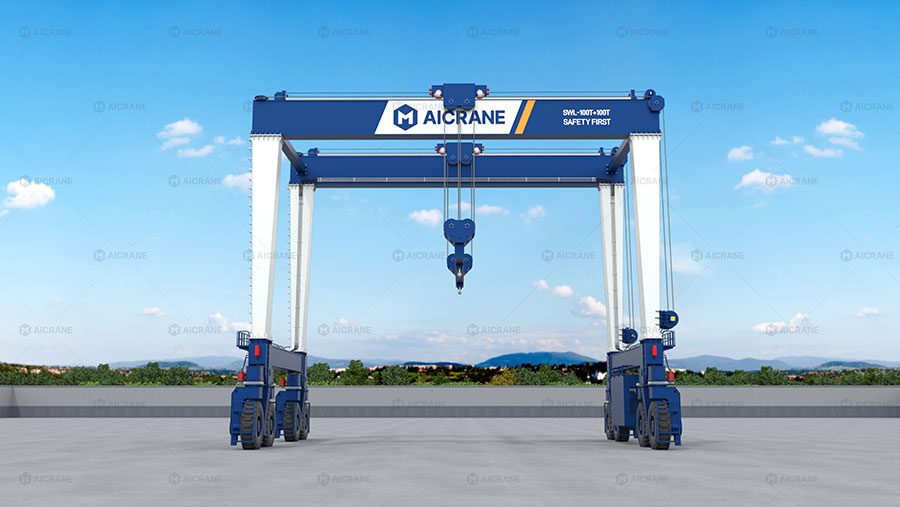
Understanding the Role of Legs in RTG Cranes
The legs of an RTG crane serve as the primary load-bearing components that transfer weight from the crane bridge, trolley, and load directly to the wheels and the ground. Unlike rail-mounted gantry cranes, rubber tired gantry cranes must distribute the crane load evenly across multiple wheels while moving on variable surfaces, which introduces unique structural challenges. The legs not only support the vertical loads but also absorb lateral forces generated during crane travel, turning, and load handling. Consequently, the design of RTG crane legs must address:
-
Load-bearing capacity: Legs must support the combined weight of the crane structure, trolley, hoist, and lifted cargo.
-
Flexural strength: They need to resist bending moments during lifting and maneuvering operations.
-
Stability: Ensuring the crane does not tip or sway under dynamic loads or wind forces.
-
Mobility requirements: Legs must integrate with the wheel assemblies, enabling smooth steering and movement across container yards.
-
Durability and fatigue resistance: Repeated lifting and traveling cycles can induce fatigue, making material selection and structural detailing critical.
Structural Components of RTG Crane Legs
RTG crane legs are generally composed of the following structural elements:
1. Primary Vertical Columns
The primary columns are the vertical members connecting the overhead gantry crane bridge to the wheel assemblies. They carry most of the vertical load and are designed as box-section or I-beam profiles, providing a high strength-to-weight ratio. Box-section columns are particularly favored because they offer superior torsional rigidity and can resist lateral bending effectively.
-
Material: High-strength steel (typically ASTM A572 or equivalent) is used to ensure that the legs can endure both static and dynamic loads without excessive deformation.
-
Design consideration: The height of the vertical columns is determined by the required lifting height and container stacking configurations, while their thickness and cross-sectional dimensions are optimized to balance weight and strength.
2. Diagonal Bracing and Triangulation
To enhance stability, RTG legs often include diagonal bracing forming triangular frameworks between the vertical columns and the crane base. This triangulation increases the stiffness of the leg structure and distributes stresses more evenly under eccentric or uneven loads.
-
Benefit: Bracing reduces lateral deflection when the crane moves, lifts asymmetrical loads, or operates in high winds.
-
Design tip: Bracing members must be welded or bolted with precision, as weak connections can compromise structural integrity.
3. Wheel Assemblies and Base Connections
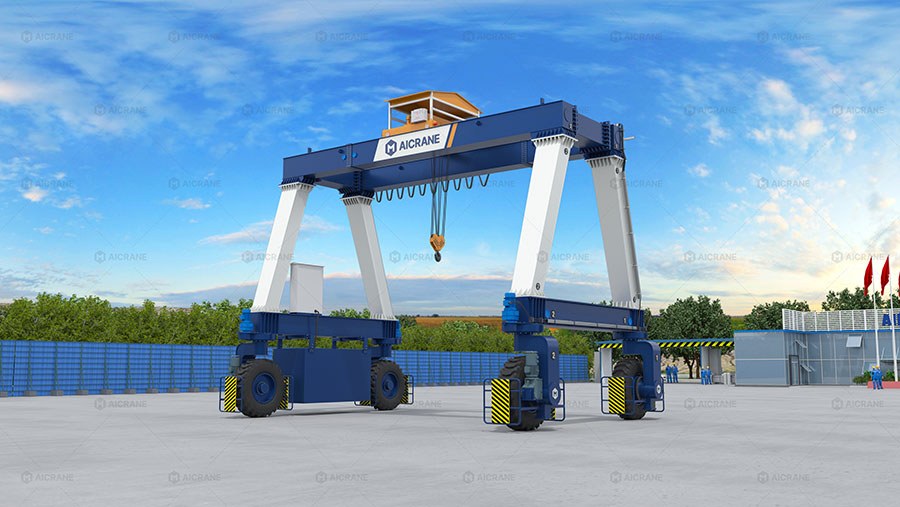
The bottom of the legs houses the wheel assemblies, which can be either single or dual-wheel configurations, depending on the gantry crane capacity. The connection between the leg and wheel assembly must be robust, capable of absorbing impact forces, and allow for smooth articulation of steering mechanisms.
-
Integration: Hydraulic steering cylinders and suspension systems are often integrated into the base to improve maneuverability and reduce stress on the legs.
-
Load transfer: The base must distribute loads uniformly to prevent localized stress concentrations, which can lead to cracking or premature fatigue.
4. Cross Members and Tie Beams
Cross members link the legs laterally at the top and sometimes mid-height, enhancing torsional stiffness and reducing sway. They are especially critical for double-leg RTG cranes, where each side must act in unison to maintain alignment under load.
-
Functionality: Cross members can also serve as pathways for electrical conduits, hydraulic lines, and maintenance access ladders, but their structural integrity cannot be compromised for convenience.
Key Considerations in Leg Structure Design
Designing RTG crane legs is a complex process that requires balancing safety, strength, and functionality. Key considerations include:
1. Load Distribution and Stress Analysis
Legs must handle both static loads from the mobile gantry crane and lifted cargo, and dynamic loads generated during movement, braking, and acceleration. Engineers use finite element analysis (FEA) to model stress distribution, identify high-stress areas, and optimize cross-section geometry. This ensures the crane can withstand extreme loading scenarios without yielding or buckling.
2. Material Selection
High-strength, low-alloy steels are preferred due to their excellent combination of tensile strength, fatigue resistance, and weldability. Steel with good toughness minimizes the risk of fracture under cyclic loads or impact conditions, which is essential for RTG cranes operating in busy container yards.
3. Stability Against Tipping and Sway
RTG crane legs must maintain stability under off-center loads or strong wind conditions. Designers often calculate the center of gravity, wheel base width, and leg spread to ensure that tipping moments do not exceed safety margins. Advanced RTG designs may include hydraulic leg levelling or automatic tilt sensors to enhance stability dynamically.
4. Mobility and Steering Mechanisms
The leg design must accommodate hydraulic steering systems, enabling RTG cranes to execute tight turns, traverse inclines, or operate in limited space. Legs must be robust enough to handle forces from turning, braking, and uneven surfaces without compromising the structural integrity of the crane.
5. Fatigue and Longevity
RTG cranes undergo thousands of lifting and traveling cycles annually. Legs are subject to fatigue loading, which can initiate cracks over time. Design strategies to extend life include:
-
Using rounded corners in welds to reduce stress concentrations.
-
Incorporating gussets and reinforcements at high-stress junctions.
-
Conducting periodic inspections and maintenance to detect early signs of fatigue.
Innovations in RTG Leg Design
Modern RTG cranes incorporate several innovations to improve leg performance:
-
Lightweight yet high-strength alloys reduce overall crane weight while maintaining load-bearing capacity.
-
Modular leg construction allows easier transportation, assembly, and replacement of damaged sections.
-
Hydraulic suspension systems integrated into legs enhance shock absorption, improve ride quality, and reduce stress on structural members.
-
Smart monitoring systems embedded in legs can track strain, temperature, and vibration, providing real-time data to prevent failures.
Conclusion
The leg structure of a rubber tyred gantry crane is far more than a simple support system; it is a critical engineering component that influences safety, performance, and longevity. A well-designed leg structure ensures optimal load distribution, stability, and resistance to fatigue while enabling smooth mobility and operational flexibility. Manufacturers must carefully consider material selection, structural geometry, stress analysis, and integration with wheel assemblies and steering systems.
As container terminals grow larger and the demands on RTG cranes increase, innovation in leg design becomes essential. From advanced materials and modular construction to integrated monitoring and hydraulic stabilization, the evolution of leg structures continues to enhance the efficiency, safety, and durability of RTG cranes in industrial and port operations.
Investing in superior leg structure design not only ensures the crane’s operational safety but also reduces maintenance costs, increases lifespan, and allows operators to handle heavier loads with confidence. For any organization reliant on RTG cranes, understanding the nuances of leg design is fundamental to achieving optimal performance in today’s demanding logistics and industrial environments.